
Texas Roofing Website Build: Southern TX Traditions

- Roofing Website Design
- The process of creating a website that presents roofing services, company information, and customer inquiry options.
- Lead-Generation Website
- A website designed to encourage relevant visitors to contact a business or submit an inquiry.
- Quote Request System
- An online feature that allows potential customers to submit information about a project and request an estimate.
- Local SEO
- Improving a business's visibility for searches related to its services and geographic market.
- Service Pages
- Dedicated website pages that explain particular services offered by a business.
- Responsive Web Design
- A design approach that adapts website content and layout to different screen sizes.
A roofing and construction company's website needs to communicate more than its services. Homeowners want to understand what a contractor offers, whether the business can handle their project, and how to request an estimate. For roofing companies operating in competitive Texas markets, an organized website can play an important role in connecting those questions with clear answers.
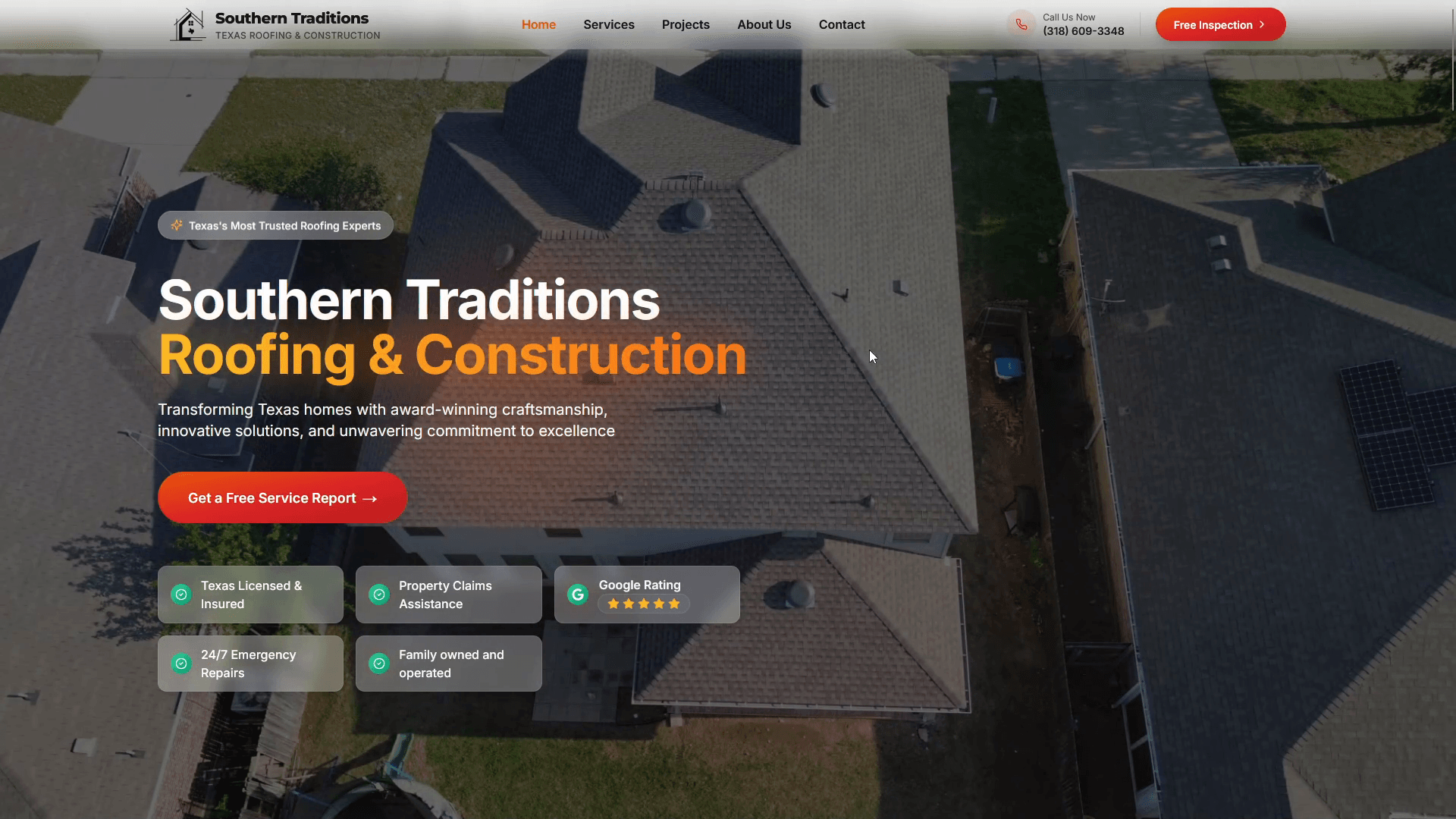
This Texas roofing website build case study examines CodenVibe's website development project for Southern TX Traditions, a Texas roofing and construction business. The project focused on creating a lead-generation website with service information, a quote-request system, and a foundation for ongoing website management and search engine optimization (SEO).
Unlike a traditional online brochure, the website was intended to support potential customer inquiries and provide a practical digital presence for the business. This case study explores the project's documented scope, the design considerations behind a roofing website, and the lessons other contractors can apply when planning their own websites.
Southern TX Traditions: Roofing Website Project Overview
Southern TX Traditions is a roofing and construction business in Texas. The company appears in CodenVibe's website development portfolio as a local business project featuring roofing service information and a quote-request system.
CodenVibe developed the website to support the company's online presence and provide prospective customers with a way to explore its services and request estimates.
The project is also featured in CodenVibe's roofing and construction web design portfolio, which identifies ongoing website management and SEO as additional services provided to Southern TX Traditions.
The business owner, Alex Antoon, publicly shared positive feedback about the experience of working with CodenVibe. His testimonial praised the website-building experience and confirmed that the relationship continued through website management and SEO services.
The publicly available project information establishes the website's lead-generation purpose and continued support relationship. However, verified development timelines, exact technology choices, and before-and-after performance metrics are not publicly disclosed.
The Challenge: Building a Website for a Texas Roofing and Construction Business
Roofing and construction businesses often serve customers with different project requirements. Some homeowners need repairs after storm damage, while others are planning property improvements or researching contractors for larger construction work.
A general business website must communicate these services without making visitors search through unrelated information.
For Southern TX Traditions, the project involved creating a digital presence that could present the company's roofing and construction offerings while supporting customer inquiries.
A useful contractor website must also address customer confidence. Property improvement projects can involve significant financial commitments, so visitors often want to evaluate a company's services and professionalism before submitting an estimate request.
The challenge is not simply attracting attention. The website must help potential customers move from researching their options to taking an appropriate next step.
For this project, CodenVibe's published portfolio identifies the website as a lead-generation system rather than a basic informational template.
Understanding the Needs of Roofing Customers in Texas
Texas homeowners may contact roofing contractors for different reasons, including weather-related damage, roof deterioration, renovation work, or planned improvements.
These situations create different information needs.
Someone researching a construction project may want detailed service descriptions and time to compare contractors. A homeowner with an urgent roofing problem may prioritize contact information and the availability of an estimate.
A well-structured roofing website should accommodate both types of visitors.
Clear navigation helps users identify relevant services, while descriptive content explains what the business does. A quote-request system provides a convenient method for starting a conversation about a specific project.
The website must also communicate accurately. Contractors should avoid advertising services, certifications, warranties, or geographic coverage that they cannot substantiate.
For Southern TX Traditions, the documented project scope centered on service presentation and estimate capture. Those two functions provide a practical foundation for a roofing and construction business website.
CodenVibe's Website Development Approach
CodenVibe approached Southern TX Traditions as a website project designed to support business inquiries.
According to the company's published project description, the website includes roofing and construction service information and a quote system. The project also includes ongoing site management and SEO support.
This positions the website as part of the business's broader customer acquisition process rather than a standalone design asset.
A lead-generation website should allow visitors to understand what the company offers and provide a clear way to contact the business about an appropriate service.
For this type of project, several design considerations are especially important:
Clear business positioning: Identify the company as a roofing and construction provider rather than relying on generic marketing language.
Service-focused organization: Present relevant services so visitors can quickly determine whether the company matches their needs.
Quote-request functionality: Provide a structured method for prospective customers to submit project inquiries.
Professional presentation: Maintain a consistent visual identity that supports the company's brand.
Mobile-friendly navigation: Make important content and contact options usable on smaller screens.
Readable content: Use descriptive headings and straightforward explanations rather than unnecessary technical jargon.
Search-friendly structure: Organize pages so visitors and search engines can understand their subject matter.
Ongoing maintainability: Support content updates, technical fixes, and SEO improvements after launch.
The presence of service information and quote-request functionality is confirmed in CodenVibe's portfolio. The remaining principles describe the broader design considerations relevant to evaluating and maintaining this type of website, rather than independently verified technical specifications of the Southern TX Traditions build.
How the Southern TX Traditions Website Supports Customer Inquiries
One of the project's central documented features is its quote-request system.
For roofing and construction companies, estimate requests are important because each potential project may differ in property type, service requirements, timing, and scope.
A website inquiry system gives prospective customers a way to communicate their needs without depending exclusively on phone conversations.
The quote flow should be easy to understand and request only the information necessary to begin evaluating a project.
For example, useful information might include the requested service, general property location, a method of contact, and a brief description of the work.
An effective estimate-request experience can help:
Organize incoming inquiries: Capture customer information in a consistent format.
Identify requested services: Help the business distinguish roofing inquiries from other construction requests.
Reduce communication friction: Provide an alternative for customers who cannot call during business hours.
Collect project context: Give staff enough information to begin preparing an appropriate response.
Support customer follow-up: Make it easier to contact prospective customers after receiving an inquiry.
Improve internal organization: Maintain a clearer record of submitted requests when suitable storage or integration is configured.
Clarify next steps: Explain what customers should expect after submitting a request.
Accommodate mobile users: Provide a convenient inquiry option for people using smartphones.
A quote form does not automatically guarantee more leads or completed projects. Its value depends on usability, the relevance of website traffic, and the company's ability to respond to inquiries.
Designing a Quote Request System for Roofing Projects
A roofing estimate form should balance useful information collection with a straightforward user experience.
Requesting too little information may leave the contractor unable to understand the customer's needs. Asking too many questions can create unnecessary work for visitors before an initial conversation has even begun.
A practical first-contact form generally focuses on essential details, with more complex project questions handled during follow-up.
Important elements to consider include:
Customer name: Identify the person requesting information.
Contact method: Collect an email address or phone number appropriate for follow-up.
General project location: Confirm whether the property is within the contractor's service area.
Requested service: Let customers select roofing or construction services relevant to their needs.
Project description: Provide space for a short explanation of the issue or planned work.
Optional supporting details: Allow additional information when it helps the contractor assess the inquiry.
Clear validation: Explain missing or incorrectly entered information without deleting completed fields.
Submission confirmation: Tell customers whether their request was received and what happens next.
These are recommended elements for contractor inquiry forms, not a claim that every listed field appears in Southern TX Traditions' current form.
The W3C Web Accessibility Initiative's forms guidance provides practical recommendations for labels, instructions, validation, and accessible form interactions.
Applying these principles makes a form easier to understand for a wider range of users.
Connecting Website Design With Business Operations
A roofing website becomes more useful when incoming inquiries fit naturally into the contractor's existing workflow.
A customer may submit a quote request, but someone still needs to review the information, respond, schedule an assessment, and track the opportunity.
Without a clear process, even a well-designed website can generate inquiries that receive slow or inconsistent follow-up.
For contractors evaluating their online systems, an organized workflow may include:
Form submission: A potential customer sends a project inquiry.
Submission recording: The request is stored in an authorized system.
Staff notification: The appropriate employee or team receives an alert.
Inquiry review: Staff evaluate the requested service and general location.
Customer follow-up: The business contacts the customer to discuss the project.
Appointment coordination: An inspection or consultation is scheduled where appropriate.
Opportunity tracking: The inquiry progresses through the company's sales process.
Outcome measurement: The business records whether the inquiry leads to an inspection, estimate, or project.
CodenVibe offers business automation and integration services that can help organizations connect websites with operational applications.
However, publicly available project information does not establish that Southern TX Traditions uses a particular CRM platform or automated lead-routing integration. Such features should be confirmed before they are described as implemented project deliverables.
Mobile-Friendly Website Design for Roofing Contractors
Mobile usability is an important consideration for roofing websites because homeowners may search for contractors while away from a desktop computer.
A person dealing with a roof leak or storm-related property damage may prefer to quickly locate contact details, check available services, and request assistance.
A mobile-friendly website should adapt navigation, content, images, and forms to smaller screens without hiding essential information.
For Southern TX Traditions, mobile accessibility is an important evaluation criterion for the website's service and quote-request experience.
The Google Search Central developer guide recommends building websites that are secure, fast, accessible, and usable across devices.
Important mobile design considerations include readable typography, appropriately sized buttons, clearly labeled form fields, and layouts that do not require horizontal scrolling.
Loading performance also matters. Large project photographs, unnecessary scripts, and poorly optimized resources can make websites slower on mobile connections.
Google's Core Web Vitals provide a way to evaluate aspects of loading, interactivity, and visual stability.
For this case study, no independently verified mobile performance scores or Core Web Vitals results were available. Any numerical performance claims would require testing and supporting data.
Local SEO Strategy for a Texas Roofing Business
Local search visibility matters for roofing and construction companies because many potential customers look for contractors serving a specific city or surrounding area.
A website should make it clear which locations the business serves and which services are available.
For Southern TX Traditions, CodenVibe publicly identifies SEO as part of the ongoing client relationship.
This demonstrates that the engagement extends beyond initial website development, although the exact keywords, rankings, and results are not publicly disclosed.
Local SEO work may involve improving service descriptions, page titles, internal links, technical accessibility, and the accuracy of business information.
Google's local ranking documentation explains that local results primarily depend on relevance, distance, and prominence.
A website can support relevance by clearly explaining its services and business coverage, but creating a location page does not automatically guarantee that the company will appear prominently in local search results.
Creating Service Content That Supports Local Search
Service pages should help visitors understand the work a contractor provides.
For a roofing and construction company, useful content might explain the nature of a service, typical project considerations, how an assessment works, and when a customer should contact a qualified professional.
Search-friendly content should not simply repeat the same keyword across multiple paragraphs.
Google's SEO Starter Guide recommends clear website organization, useful content, and descriptive links.
Practical on-page considerations include:
Accurate service descriptions: Explain what the business actually offers.
Descriptive page titles: Make the subject of each page clear.
Logical heading structure: Organize information into understandable sections.
Relevant internal links: Help visitors navigate between related services and information.
Appropriate location references: Mention cities only where they are relevant to the business.
Original project information: Use accurate examples of completed work when permission and documentation are available.
Helpful imagery: Include relevant images with meaningful alternative text.
Clear contact information: Make it easy for prospective customers to reach the business.
For Southern TX Traditions, the documented combination of service information, quote functionality, and ongoing SEO provides a basis for continued website development.
Measuring Roofing Website SEO and Lead Generation
The success of a roofing website should be measured using business-relevant data rather than visual appearance alone.
A website may look professional and receive visitors without consistently generating qualified inquiries.
For this reason, roofing companies should evaluate both search visibility and the actions people take after reaching the website.
Useful measurements include:
Organic search impressions: How frequently relevant website pages appear in search results.
Organic clicks: The number of visits generated through unpaid search listings.
Service-page traffic: Visitor activity on pages describing the company's roofing and construction services.
Quote submissions: The number of successful estimate-request form submissions.
Qualified inquiries: Requests matching the company's services and geographic coverage.
Mobile engagement: How effectively smartphone users access relevant information.
Form completion rate: The share of visitors who successfully complete an inquiry after starting it.
Response time: How quickly staff follow up with incoming requests.
Scheduled appointments: Inspections or consultations resulting from website inquiries.
Completed projects: Confirmed business outcomes attributable to website-generated opportunities.
These measurements help connect website activity with actual operational performance.
Google Search Console can help monitor search impressions, clicks, and indexing, while Google Analytics can measure appropriately configured website events.
No verified Southern TX Traditions analytics reports, lead totals, or revenue figures were available for this article. Therefore, the project should not be described as having achieved a particular traffic increase, conversion improvement, or financial return.
Project Outcome: A Roofing Website With Continued Support
The documented outcome of the Southern TX Traditions project is a completed roofing and construction website featuring service information and a quote-request system, supported by an ongoing relationship with CodenVibe for website management and SEO.
The project is included in CodenVibe's public portfolio and roofing-industry work.
The client relationship also has a publicly available testimonial from business owner Alex Antoon, who expressed satisfaction with the website development experience and confirmed continued use of CodenVibe for website management and SEO.
This feedback provides first-party evidence of client satisfaction, but it should not be treated as independent proof of increases in website traffic, roofing inquiries, or revenue.
From a business perspective, the project demonstrates how a roofing company can use a custom website as a foundation for service presentation and estimate-request collection.
The ongoing management component is also relevant. Contractor websites need content updates, technical maintenance, and periodic SEO review as business services and customer needs change.
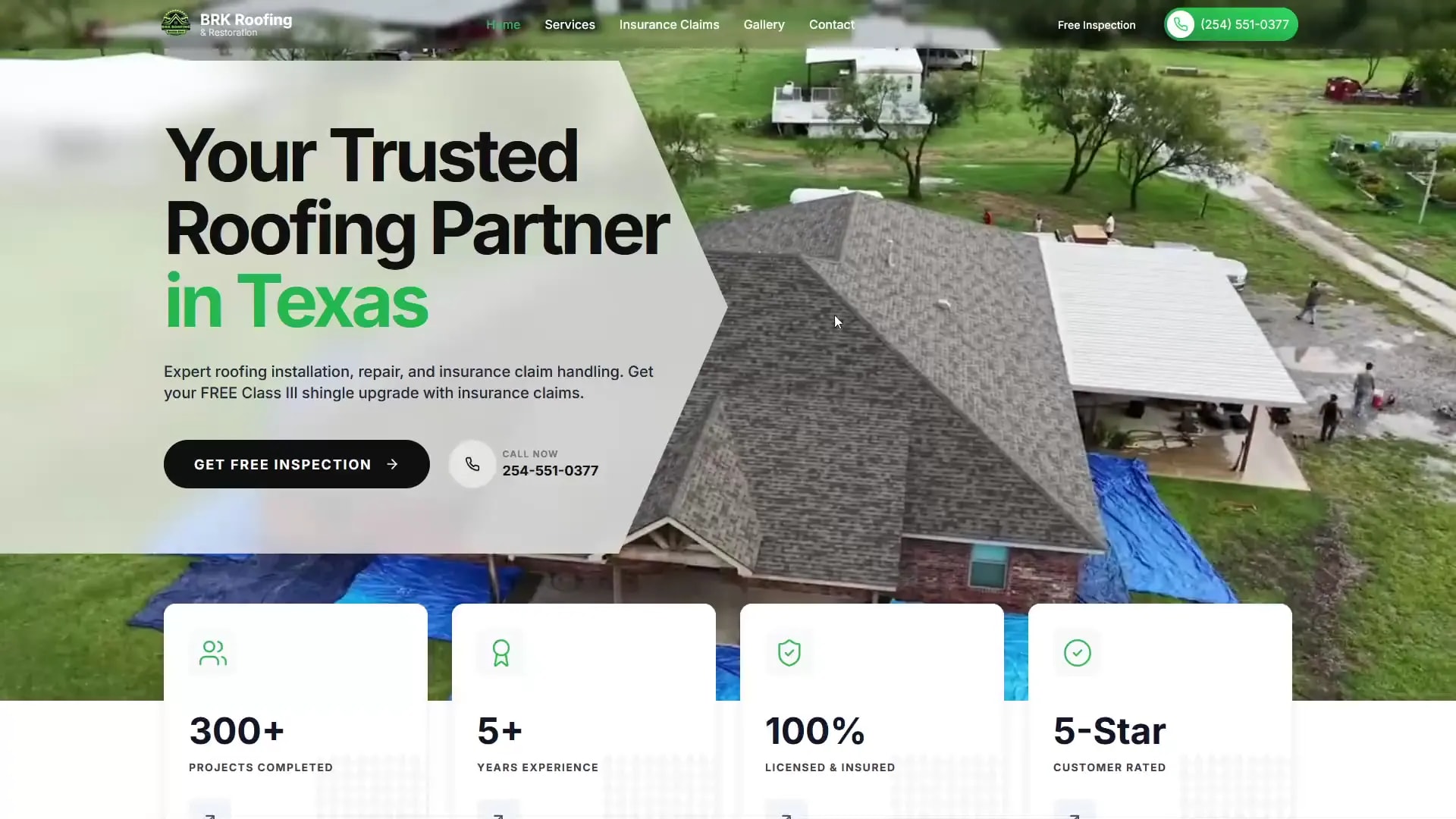
CodenVibe's roofing web design portfolio includes Southern TX Traditions alongside BRK Roofing & Restoration, showing its work within the roofing and construction industry.
The broader lesson is that a successful website project should be evaluated not only by how it looks at launch but also by how clearly it supports the business's daily operations and how effectively its performance can be measured over time.
Frequently Asked Questions
Need help building this?
Our team specializes in custom software solutions. Let us handle the technical complexity.
Get a Free ConsultationAbout the Author

Engineering & Growth Team at CodenVibe
The CodenVibe team builds custom automation, API systems, and scalable web platforms for growing businesses. We share what we learn from the trenches of real client projects.